
Digital transformation is reshaping the global manufacturing landscape by fundamentally changing how products are designed, developed, and manufactured. By integrating digital technologies across all manufacturing functions, organisations can significantly enhance operational efficiency, productivity, and competitiveness. Achieving this transformation requires a shift from traditional manufacturing models to smart manufacturing enabled by Industry 4.0 technologies.
At the core of digital transformation is the adoption and application of Industry 4.0. This involves leveraging advanced technologies to create highly digitalised, automated, and intelligent product development and manufacturing processes. Key enabling technologies include the Internet of Things (IoT) and smart sensors, artificial intelligence (AI), digital twins, cloud computing, big data analytics, augmented and virtual reality, additive manufacturing, advanced robotics, blockchain, and system integration. Together, these technologies enable smarter decision-making, greater flexibility, and more autonomous industrial operations.
Every organisation is unique and must therefore assess its own readiness and capabilities for integrating Industry 4.0 technologies. The journey toward digitalisation is often complex and presents multiple technical, organisational, and strategic challenges. We support and guide companies through this transition, helping them move from conventional manufacturing approaches to digitally driven operations. The first step in this journey is a clear understanding of the current state. We have developed a digital transformation performance measurement tool that evaluates an organisation’s digital capabilities and maturity. This assessment provides a structured, data-driven view of where a company stands today and identifies practical pathways toward successful digital transformation
Digital Transformation Performance Measurement Tool Overview
Industry-validated Digital Transformation Performance Measurement Tool tool offers a structured and multi-dimensional approach that serves as a suitable lens through which an organisation’s digital maturity readiness across technological, organisational, and cultural dimensions is evaluated. Figure 1 outlines the digital transformation assessment framework employed in this analysis.
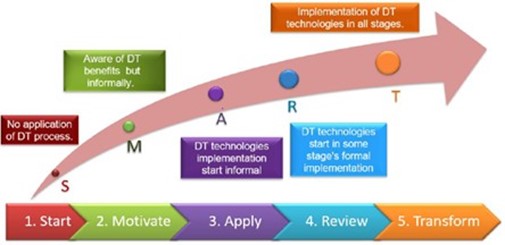
Figure 1 SMART Scale levels of digital transformation journey
The Tool encompasses four balanced perspectives, each carrying the same analytical weight, considers representing the incremental trajectory an organisation makes on its digital transformation journey. These perspectives are:
a. Digital Transformation Processes. Addresses the presence and influence of factors including executive sponsorship, structured transformation initiatives, and benefit realisation tracking.
b. Smart Data Environment. Examines the organisation’s adoption of enabling I4.0 technologies such as IoT, AI, cybersecurity, digital twins, cloud computing, and big data analytics.
c. Autonomous and Automated Smart Resources. Focusing on evaluating advanced manufacturing capabilities including robotics, additive manufacturing, and simulation.
d. People and Skills. Assesses workforce digital competencies, training and development priorities, and cultural readiness for digital change.
Using the same SMART scale (Start → Motivate → Apply → Review → Transform) mirrors the same developmental logic and assures methodological consistency across both transformation domains and both assessments (Table 1).
SMART Scale Definition
Start The company does not apply the digital transformation practices.
Motivate The company is aware of the benefits of digital transformation but has no formal method to implement it.
Apply The company has just started to apply the digital transformation technologies in an informal method.
Review The company has implemented the digital transformation technologies following a formal method at some stages.
Transform The company has implemented digital transformation technologies in all stages following formal methods and the key people.
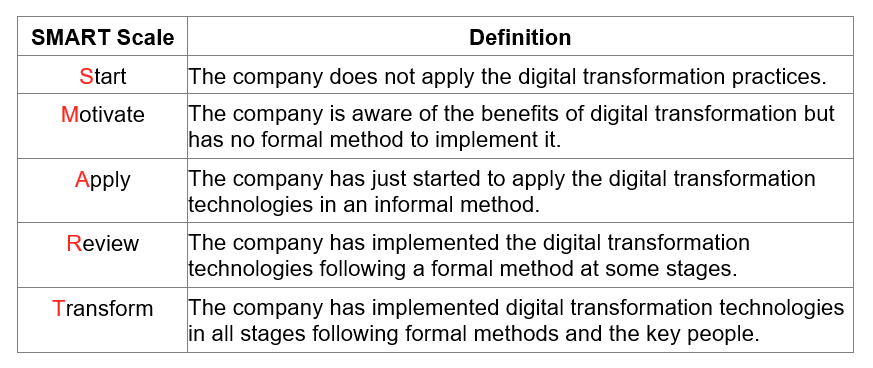
Table 1 SMART Scale definitions
How the Digital Transformation Performance Measurement Tool Is Applied
The Digital Transformation Performance Measurement Tool is designed to assess an organization’s readiness for its digital transformation. The following guidelines describe how the tool should be applied to ensure reliable and meaningful results.
Participant Selection
It is recommended to involve a group of at least five representatives from different departments to capture a balanced, cross-functional view of the organization.
How Participants Complete the Assessment
Each participant should complete the assessment based on their own experience, responsibilities, and daily practices, not on assumptions about how the company operates overall. The goal is to measure how Digital Transformation is applied in practice across the organization.
The assessment typically takes about one hour per participant.
Participant Briefing
Before starting, participants receive a short presentation that introduces:
• The principles of Digital Transformation and Industry 4.0.
• Key Industry enabling technologies.
• The structure and purpose of the assessment tool
This ensures a common understanding and increases the reliability of the responses.
Ways to Apply the Tool
The Digital Transformation Performance Measurement Tool can be administered in one of the following ways:
- Individual interviews
Conducted face-to-face or online via video call, with each participant interviewed separately. - Facilitated group session
Participants meet in one room and complete the questionnaire individually, either using an electronic form or a paper-based version.
Both approaches ensure independent responses while allowing efficient data collection.
Digital Transformation Performance Measurement Results
After all responses have been collected, The Digital Lean Exchange analyses the data and provides a detailed performance report within two weeks. This report highlights the organization’s current Digital Transformation maturity, strengths, and improvement opportunities to support its transformation journey.